Hip Hop literacy is the ability to read, interpret, and articulate through Hip Hop elements—graffiti, DJ-ing, MC-ing, breaking, and knowledge of self. By integrating these elements into educational spaces, we cultivate innovative literacy practices that empower students to critically engage with the world and articulate their voices with confidence and purpose. Central to this practice is a continuous emphasis on the fifth element: knowledge of self and community. Hip Hop literacy extends beyond lyrics to include visual and audio production techniques such as sampling and music video creation.
Hip Hop Literacy Program: Fifth Element
Created by Dr. Kashema Hutchinson, Fifth Element, a Hip Hop literacy program, uses the cultural practices, aesthetics, and language of Hip Hop as a framework for developing critical thinking, identity exploration, and knowledge of self. This interdisciplinary program mixes Hip Hop staples like sampling, graffiti and lyrics to engage learners in reading, writing, and reflection — especially centering the voices and experiences of marginalized youth.
Grounded in the belief that literacy is more than decoding texts — it’s decoding the world — the program invites participants to make meaning through their own cultural knowledge, while challenging dominant narratives in education. Activities range from creating mixtapes to breaking down bars that carry histories of resistance, survival, and brilliance.
Parts of this program have been facilitated in diverse spaces, including CUNY classrooms, cultural institutions and correctional facilities. Thanks to the generous support of the Communities Literacies Collaboratory, a comprehensive 8-week program was implemented at the New Lots branch of the Brooklyn Public Library. It was a hybrid (online and in-person) program to increase access. This immersive experience fostered deep conversation, meaningful connection, and transformative learning.

Session Breakdown:
Week 1: Hip Hop Literacy 101
- Introduction of Hip Hop’s first five elements
- Overview of the history and sociopolitical context which created Hip Hop culture
- Learn key terms and people who helped shape the culture
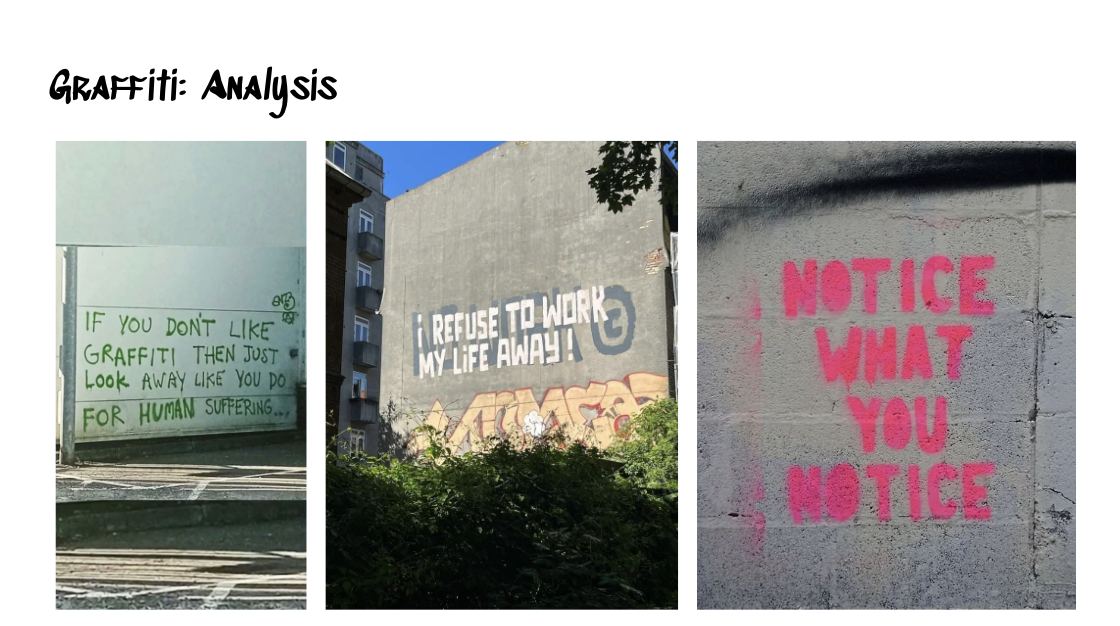
Week 2: Graffiti Literacy
- Discuss whether graffiti is art or vandalism?
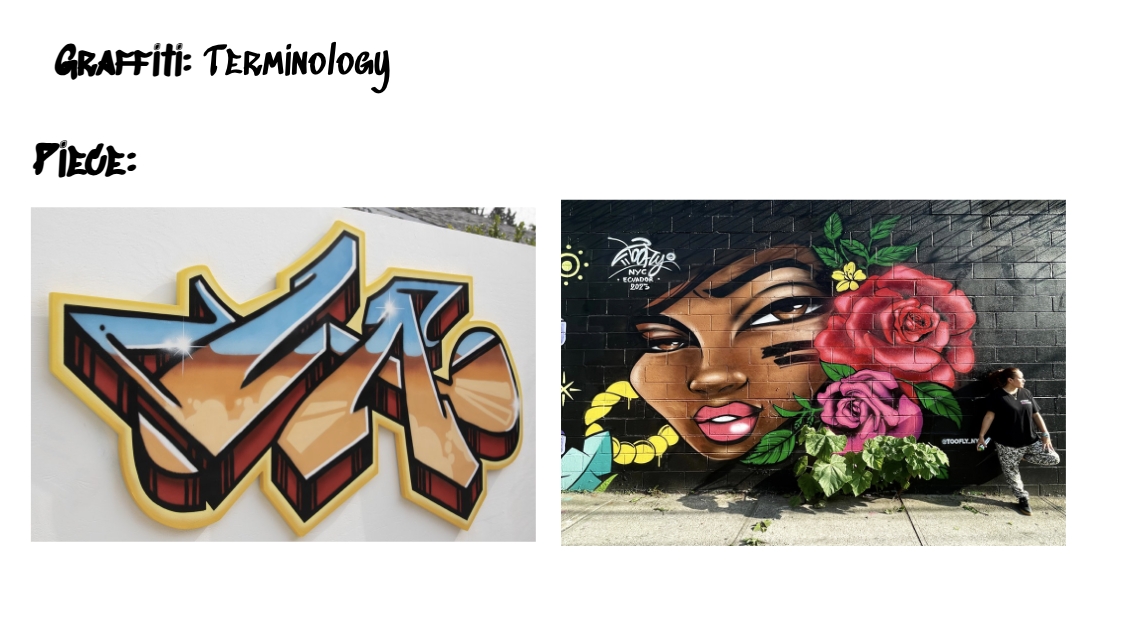
- Introduce terms such as “pieces” and “throw ups” and location references such as “the bench”, “all city” and the “yards”
- Connect the history of graffiti back to the caves and temples
- Identify writers and their works
- Understand the relationship and impact of the “Graffiti Squad”
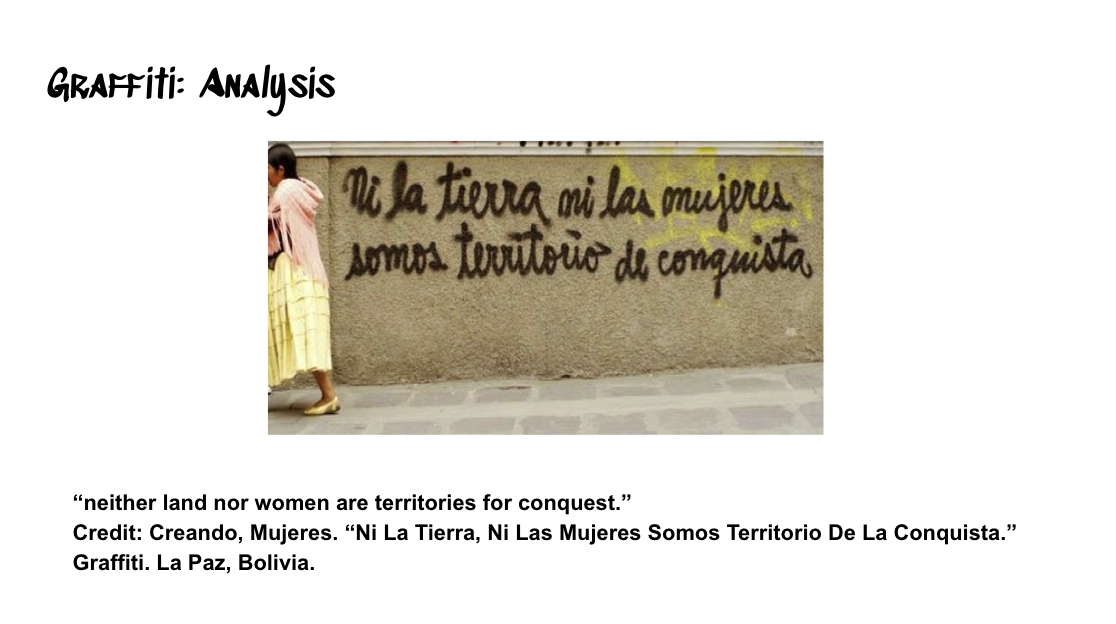
- Develop a critical lens of graffiti from different eras, locations and their respect messages.
Week 3: Sampling & Storytelling
- Explore the art and science of sampling by Hip Hop DJs and producers
- History of sampling and technological advances
- Define sonic lineage and its connection to sampling
- Examples of Hip Hop sampling, storytelling and connecting generations
- Understand sampling as a form of citation which teaches about history and memory
- Learn how to identify song samples
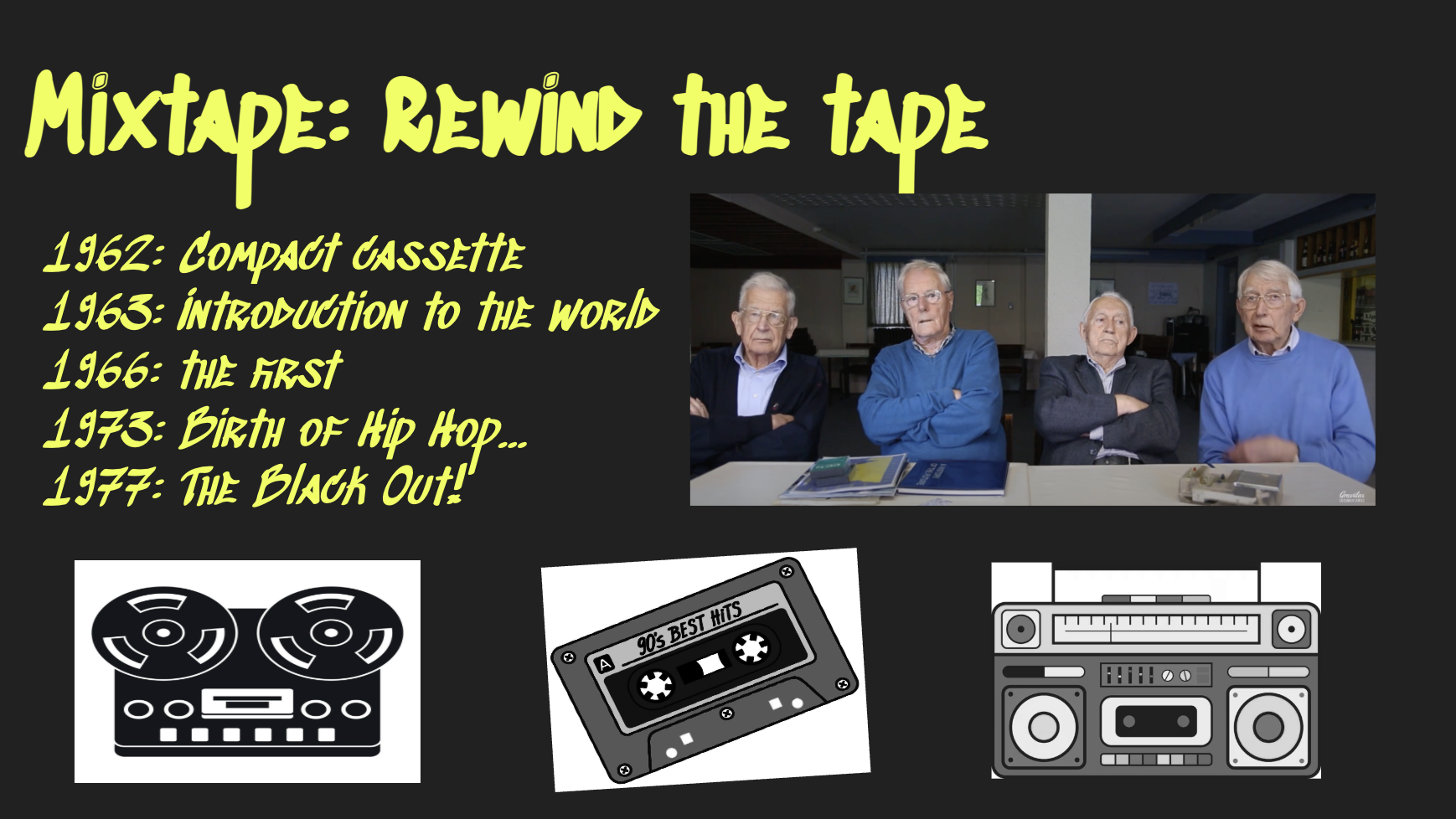
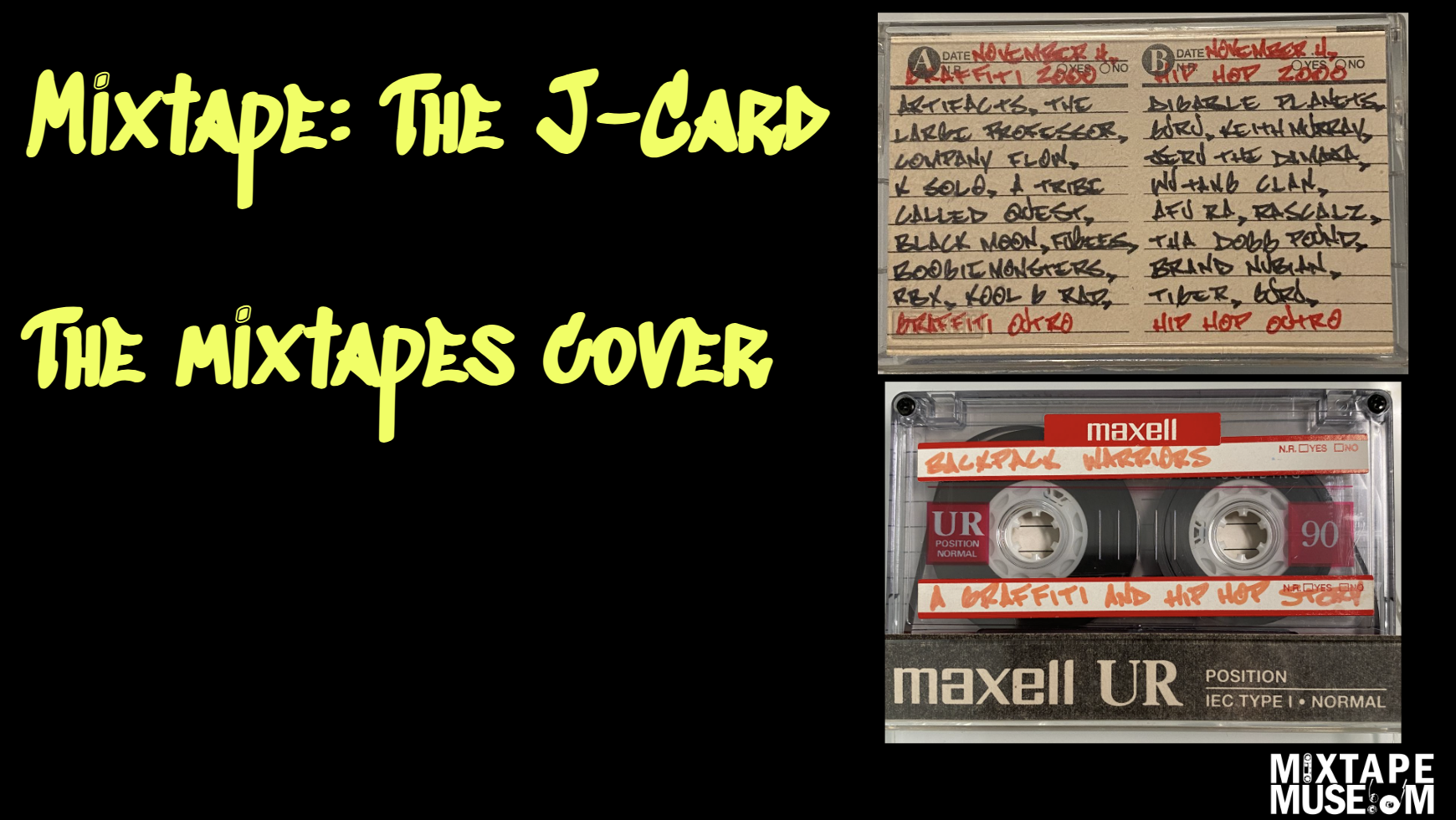
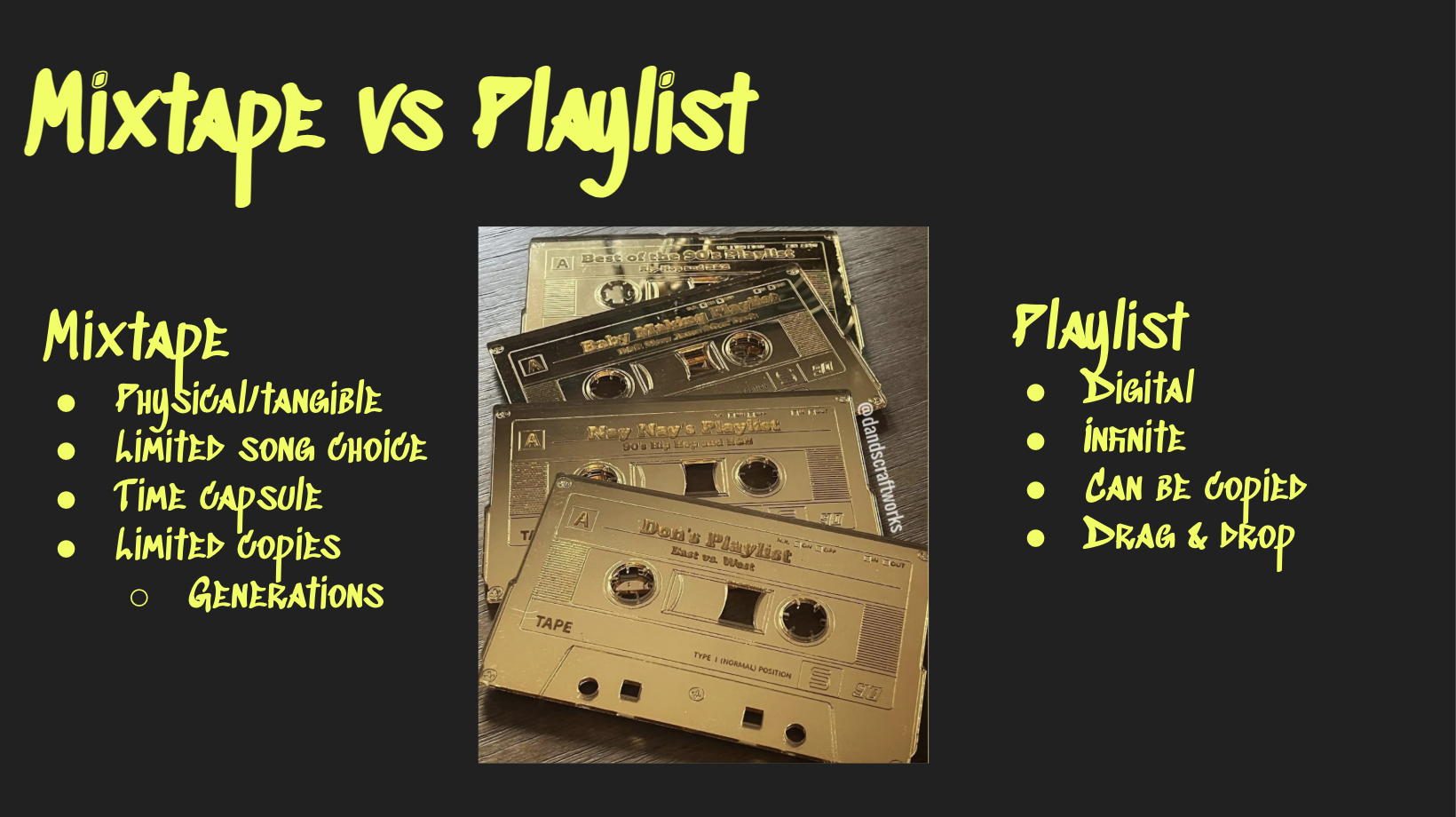
Week 4: Mixtapes & J-Cards (facilitated by Sommer McCoy of the Mixtape Museum)
- Define mixtape and how and why it differs from a playlist
- Learn the history of the cassette tape and Lou Ottens
- Examine how the cassette’s accessibility impacted Hip Hop culture
- Understand how the mixtape is a storyteller
- Create a “mixtape” that reflects a theme or era
- Introduce the J-Card and how it relates to identity, branding and creative expression
- Design a J-Card to represent the mixtape
- One of the participants, Laura G, created a Mixtape Memory for the Mixtape Museum


Week 5: Critical Literacy featuring Biggie & Tupac (Co-facilitated by Johari “Nova” James)
- Define critical literacy
- Analyze Hip Hop lyrics to understand the relationship between language and power it can hold.
- Deconstruct the meaning of lyrics as they relate to topics on equity, power and social justice.
- Identify Tupac and Biggie’s various sociopolitical lenses
- Apply critical literacy to current artists work
Week 6: Critical Race Theory x Hip Hop:
- Define Critical Race Theory (CRT)
- Discuss the tenets of CRT
- Identify key people and CRT’s genealogy
- Examine whether CRT is within Hip Hop culture more specifically, rap music, and how it is expressed
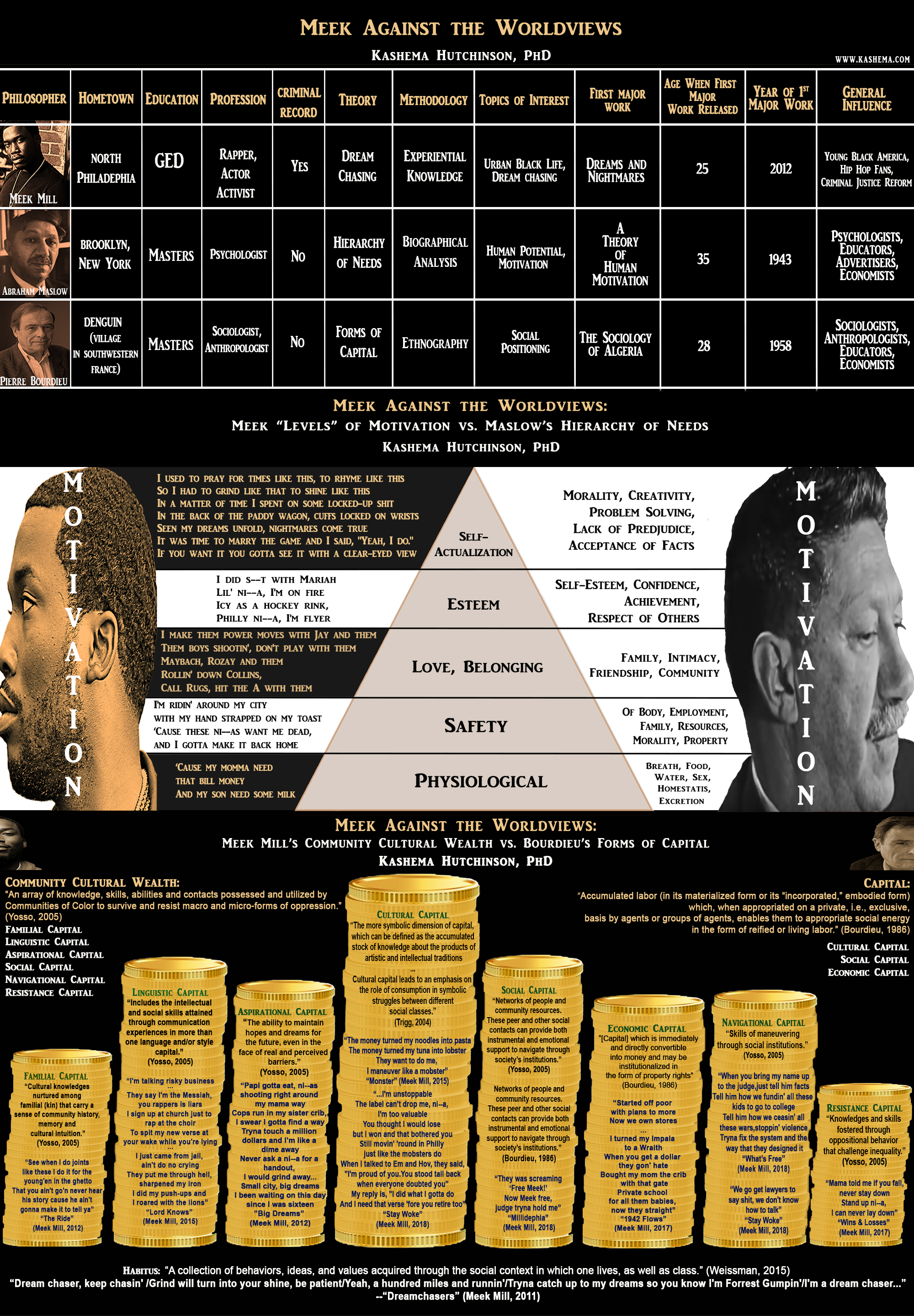
Week 7: Battle of the Worldviews
- Identify dominant worldviews
- Critique and challenge the notion of authority
- Explore the world of battle rap
- Reframe rappers as scholars and have them “battle” academic scholars
- Challenge the dominant worldviews with rap lyrics and see how they measure
Week 8: Critical Karaoke
- Apply the critical lens that has been sharpened over the previous sessions
- Choose a rap song that has a social justice theme ( gender discrimination, citizenship, sexuality…)
- Analyze the topics mentioned in the song
- Discuss the music and/or the video.
- Consider the songs production (any samples?), the artist’s perspective on the topic…
- Identify literary devices used in the song
Testimonials:
“I attended the hip hop literacy series at the New Lots library in Brooklyn. I went to these workshops with not expectation but an assumption. Entering the classroom for the first session, I quickly realized Dr. Kashema and Fifth Element was not going to fill any assumptions that I had. I assumed from the title of the course “hip hop” that it would be a leisurely conversation about some music or musician. With notebooks and poetry novel “A Rose in Concrete” on every desk, I happily understood my bias had no place and no basis.
The elementary knowledge and elevation of the culture, the art, the craft of hip hop has taken on new levels for me. I now have a new interest in the language of hip hop and its roots in religion. I honor Dr. Kashema’s excavation and persistence to educate all to the multi faceted culture that is hip hop. I recommend her literacy course to anyone looking to further their critical gaze, thought and debate. I look forward to more opportunities to observe, analyze and collaborate in the future.” -Participant, Rashida Lawrence
I now have a keen awareness of Hip Hop lyrics, tones, undertones, and can innately draw linkages among social policy, social change, inequality, political ideologies, etc. -Anonymous Participant
It makes you understand that Hip-Hop is an intentionally creative and intelligent art form. When you look at it critically, and break down the message and influences, you get a better understanding of the artists. -Anonymous Participant
| Special thanks to Robert Sinclair, Lea Salem and Trinity Watson at the New Lots Branch of the Brooklyn Public Library |
Deep gratitude for the generous support of
 kashema